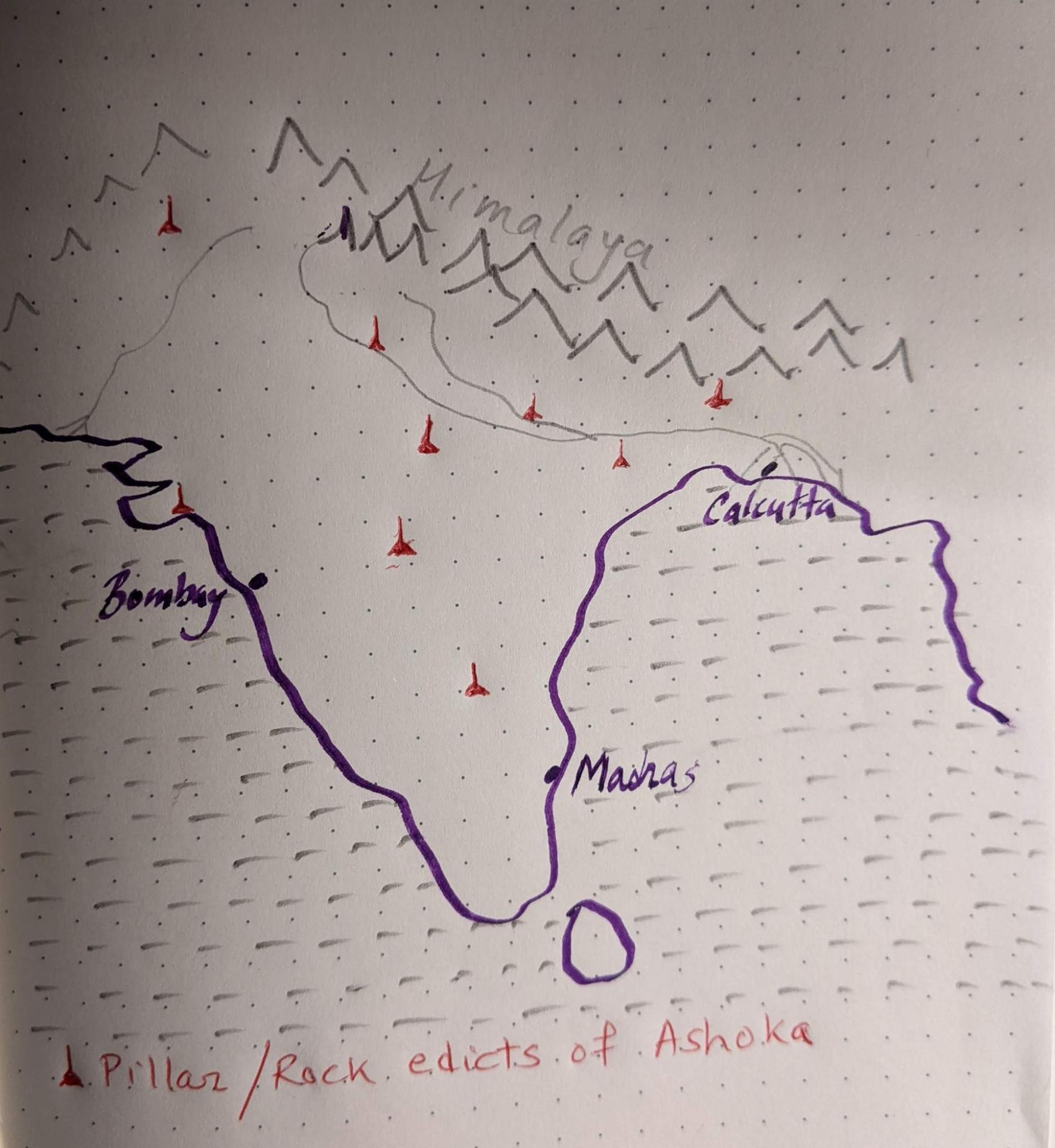
Not only the mystery script - but the message itself was identical. James Prinsep could barely conceal his excitement.
Reproductions and tracings of inscriptions on stone pillars from three far places from the Indian subcontinent were in front of him. Sent by the officers of the British East India company in the year 1836.
Sitting in Calcutta, Prinsep knew what this meant - an ancient empire stretching over the subcontinent. A long forgotten monarch was proclaiming something across the length and breadth of his empire - but what?
Let’s back up a bit.
In the 1760s, the British gained “governorship” of Bengal and Awadh - two of the rich provinces along the Ganga-Yamuna basic - from the weak Mughal emperor. Later on in the early 1800s, the Madras Presidency and the Bombay presidency of the East India Company subdued powerful local kingdoms of Tipu Sultan and the Marathas. This brought large parts of “interior” India under British rule - and became accessible to them for the first time. There was no need to hop from port to port along the coast - but boldly go into the deep interior - and indeed some Britishmen did.
Ancient rocks covered in writings in a strange script were found at multiple places. Monolithic pillars, some 40 feet tall, were also found to have long passages in the same script inscribed on them. This script is now known as the Brahmi script.
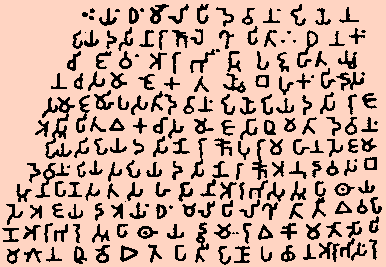
Lieutenants and officers of the Company - all implored by Prinsep - went into great trouble to obtain exact tracings of the inscriptions. The script still resisted efforts at translation.
Finally, from Sanchi in the Central Provinces, an enterprising officer noticed short messages inscribed on stone columns of the border palisades of the giant Stupa. These messages all had the same last two letters at the end. Guessing that these were probably donation notices, Prinsep guessed the word must be “daa-nam” (donation, gift)
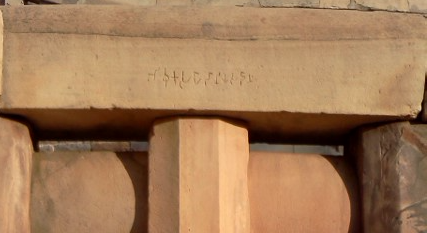
With this start, Prinsep soon deciphered the script and the language was very close to Sanskrit. He proceeded to read the detailed inscriptions - more had been obtained by then from rock faces and pillars.
Here is a sample
Beloved-of-the-Gods, King Piyadasi, has caused this Dhamma edict to be written. Here (in my domain) no living beings are to be slaughtered or offered in sacrifice. Nor should festivals be held, for Beloved-of-the-Gods, King Piyadasi, sees much to object to in such festivals, although there are some festivals that Beloved-of-the-Gods, King Piyadasi, does approve of. Formerly, in the kitchen of Beloved-of-the-Gods, King Piyadasi, hundreds of thousands of animals were killed every day to make curry. But now with the writing of this Dhamma edict only three creatures, two peacocks and a deer are killed, and the deer not always. And in time, not even these three creatures will be killed. Everywhere within Beloved-of-the-Gods, King Piyadasi's domain, and among the people beyond the borders, the Cholas, the Pandyas, the Satiyaputras, the Keralaputras, as far as Tamraparni and where the Greek king Antiochos rules, and among the kings who are neighbors of Antiochos, everywhere has Beloved-of-the-Gods, King Piyadasi, made provision for two types of medical treatment: medical treatment for humans and medical treatment for animals. Wherever medical herbs suitable for humans or animals are not available, I have had them imported and grown. Wherever medical roots or fruits are not available I have had them imported and grown. Along roads I have had wells dug and trees planted for the benefit of humans and animals. Beloved-of-the-Gods, King Piyadasi, speaks thus: In the past, state business was not transacted nor were reports delivered to the king at all hours. But now I have given this order, that at any time, whether I am eating, in the women's quarters, the bed chamber, the chariot, the palanquin, in the park or wherever, reporters are to be posted with instructions to report to me the affairs of the people so that I might attend to these affairs wherever I am. And whatever I orally order in connection with donations or proclamations, or when urgent business presses itself on the Mahamatras, if disagreement or debate arises in the Council, then it must be reported to me immediately. This is what I have ordered. I am never content with exerting myself or with despatching business. Truly, I consider the welfare of all to be my duty, and the root of this is exertion and the prompt despatch of business. There is no better work than promoting the welfare of all the people and whatever efforts I am making is to repay the debt I owe to all beings to assure their happiness in this life, and attain heaven in the next. Therefore this Dhamma edict has been written to last long and that my sons, grandsons and great-grandsons might act in conformity with it for the welfare of the world. However, this is difficult to do without great exertion.
There are 14 such “edicts” written in different years of Ashoka’s reign.
The personal style of the message is almost certainly verbatim from Ashoka himself.
The Puranas (old king lists and legends) mention Ashoka as the grandson of Chandragupta Maurya (a contemporary of Alexander of Macedonia). The reign of Ashoka has now been established to be from 268 BCE to 232 BCE. In a direct (and naive) language, we hear clearly the voice of the emperor from across 2200 years.
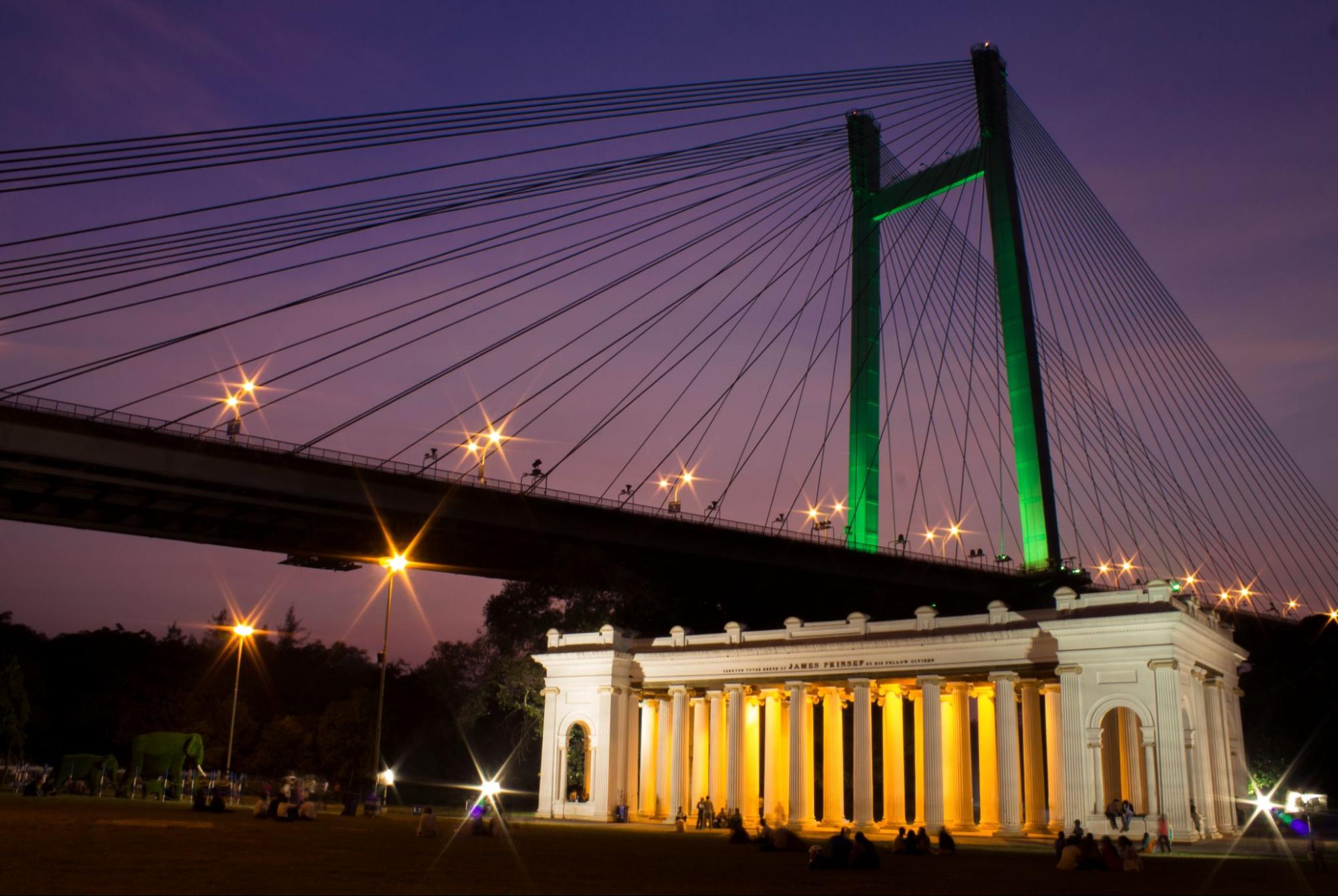
James Prinsep had come to India at the age of 20 to be the “alloy master” at the Mint at Calcutta. He had become interested in Indian history and engrossed himself in inscriptions and numismatics. After staying in Calcutta for around 18 years, he left for England experiencing recurrent headaches and sickness. Sadly, he did not recover in England and died in a year. A memorial in the shape of a Palladian porch stands near the bridge at the banks of the Hooghly river in Calcutta.
The deciphering of the script and inscriptions and the rediscovery of Ashoka was instrumental in rekindling the Indian identity during the long freedom struggle in the late 1800s and first part of the 1900s. Finally, in 1947, when India became independent from Britain, the “Dharma wheel” - found on all the pillars - was placed in the center of the national flag.